
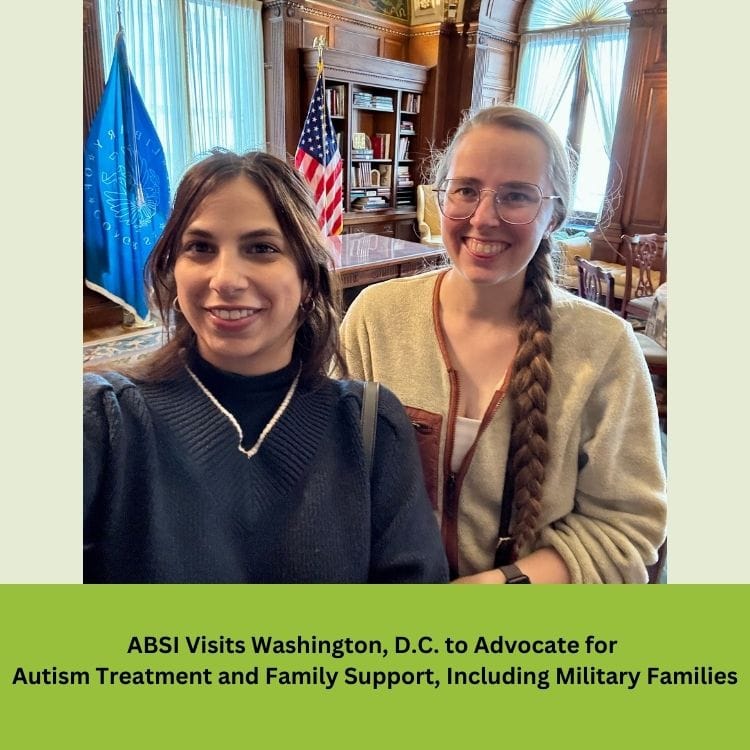
During their time in the nation’s capital, Claire and Noor met with policymakers and stakeholders to discuss the importance of removing barriers that limit access to timely diagnosis, early intervention, and continued behavioral health services. They emphasized that many families—particularly those in underserved and publicly funded communities, especially active-duty military and veteran families—face significant challenges navigating the often confusing insurance systems, provider shortages, frequent relocations, and inconsistent educational and therapeutic support. They highlighted the importance of ensuring continuity of care for military-connected children, whose progress can be disrupted by deployments and permanent change of station (PCS) moves.
A key message of their advocacy centered on the need for collaboration. Claire and Noor highlighted the importance of working closely with families, schools, military support systems, and community organizations to ensure that individuals with autism receive comprehensive support not only in clinical settings, but also in classrooms, at home, and throughout the communities in which they live. They stressed that meaningful outcomes are achieved when care systems work together to promote inclusion, stability, independence, and long-term success—especially for military families who sacrifice so much in service to the country.
